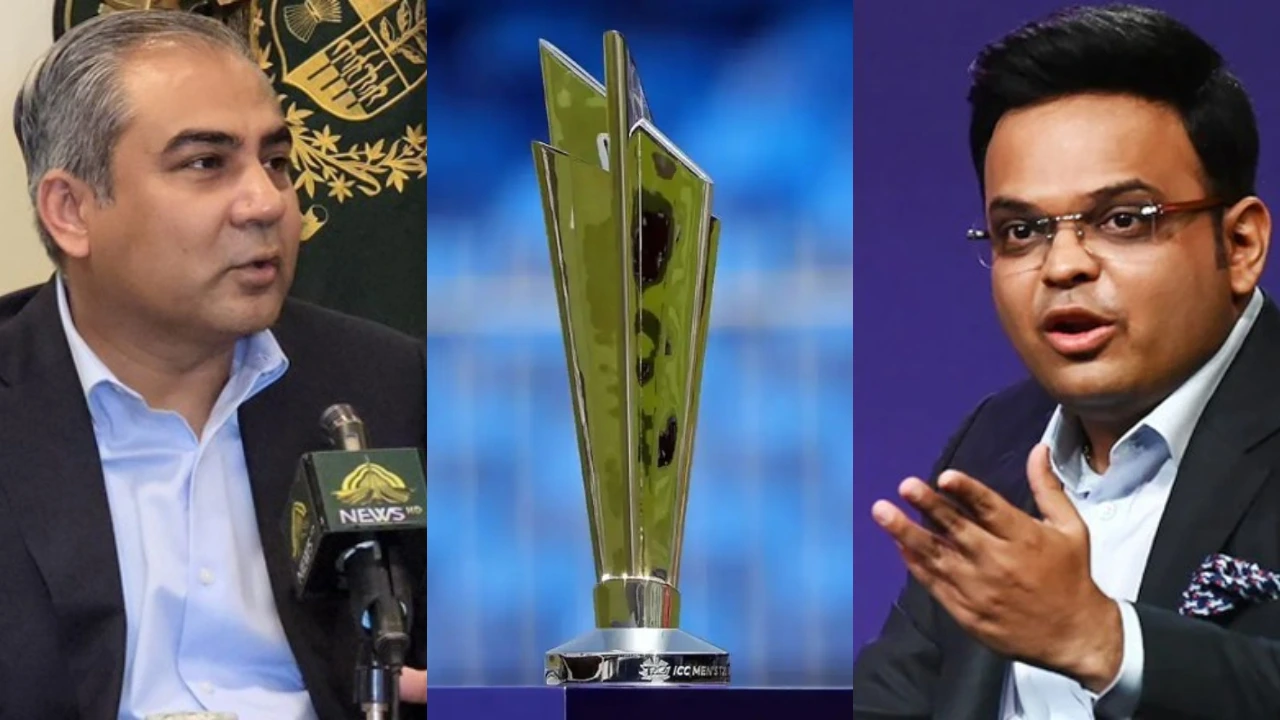
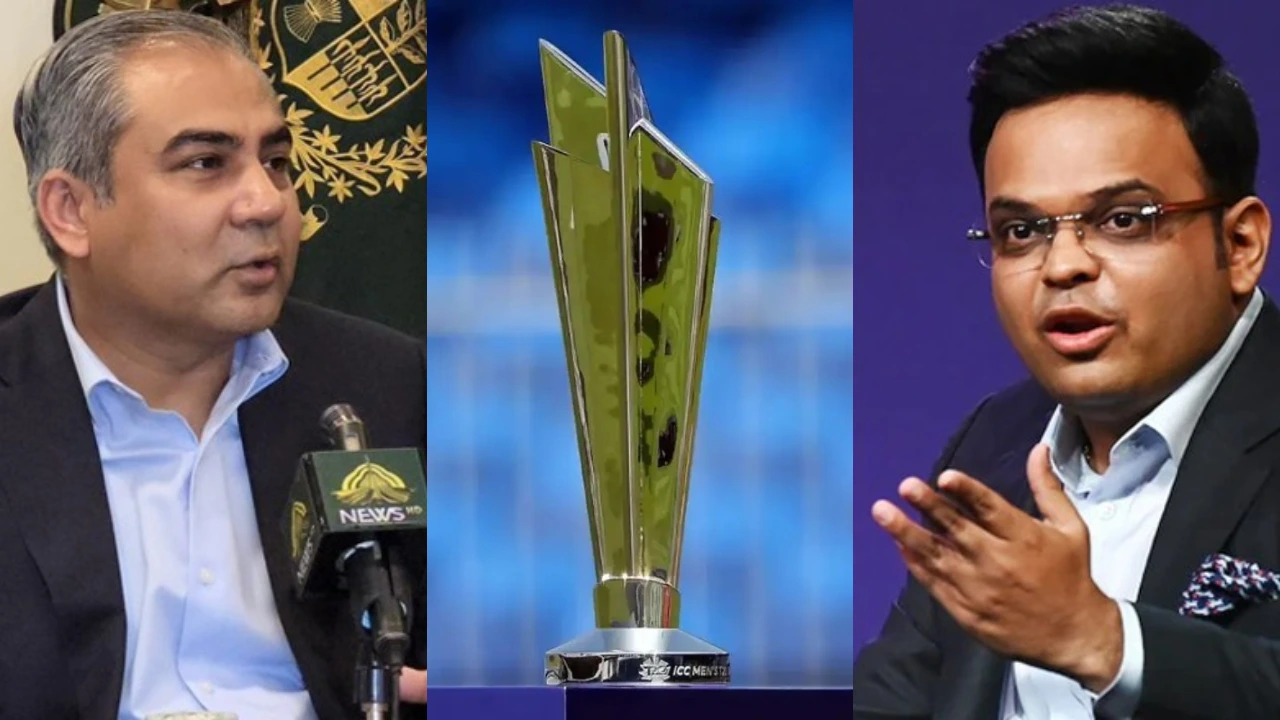
The Pakistan government has decided not to allow the national team to play its group-stage match against India during the T20 World Cup 2026. Following the decision from Pakistan, the International Cricket Council (ICC) has been exploring back-channel options to defuse the situation and avoid financial losses.
On Sunday, the Government of Pakistan confirmed that the team, led by Salman Ali Agha, will participate in the ICC tournament but will boycott the match against India. India and Pakistan are both part of Group A in the T20 World Cup 2026. The tournament will be jointly hosted by India and Sri Lanka.
All of Pakistan’s matches are scheduled to be played in Sri Lanka. The India-Pakistan match was set to take place at the R. Premadasa Stadium on February 15, but the contest will now be boycotted.
Back-Channel Talks Underway After Pakistan Decide To Skip India T20 World Cup Clash
According to Hindustan Times, the Pakistan Cricket Board and the International Cricket Council have held back-channel talks. These discussions started after the ICC asked the PCB to find a solution that protects all stakeholders.
“There have been some backchannel talks between the PCB and the ICC,” an official in the know of things told HT.
The ICC did not explain how the talks took place or whether anyone acted as a mediator. The uncertainty around the India-Pakistan match has caused concern within the cricket body.
“The ICC expects the PCB to explore a mutually acceptable resolution, which protects the interests of all stakeholders,” the statement said.
Boards such as the England and Wales Cricket Board (ECB) and Cricket Australia (CA) have expressed their displeasure with the PCB’s decision. The Board of Control for Cricket in India has not held any discussions with the PCB on the matter.
ICC May Still Seek Resolution As India-Pakistan Match Faces Uncertain Future
With less than two weeks left for the scheduled match between India and Pakistan, there is still a chance of a solution. If no agreement is reached, a scenario could unfold where India travel to Colombo, Pakistan do not show up, and Pakistan lose their league points.
The ICC can call a meeting of member boards to respond collectively to the PCB decision. Notably, the PCB has also not formally told the ICC that the move was ordered by the government. However, the board could still face sanctions, and the issue may have serious consequences.
“The ICC has issued a big statement, they have spoken about sportsmanship. We completely agree with the ICC. The BCCI won’t make any comments on it until we speak with the ICC,” Rajiv BCCI vice-president Rajiv Shukla told reporters on Monday.
PCB Responsible for Losses If India-Pakistan Match Is Boycotted
Earlier, the Bangladesh Cricket Board stated that it would only play a World Cup if matches were moved out of India. After the BCB refused to change its position, the ICC removed Bangladesh from the tournament and replaced it with Scotland.
The financial impact of a possible boycott of the India-Pakistan match is still being assessed. If the PCB does not change its stance, the ICC is expected to hold it responsible for any losses. No fixed value was assigned to individual matches during the ICC media rights bidding.
However, for the 2024-27 cycle, the ICC secured a deal worth $3 billion from the Indian market. If a T20 World Cup is valued at around $750 million, industry estimates suggest the India-Pakistan match alone could be worth close to $100 million.
Apart from the two semi-finals and the final, India’s matches draw the highest viewership, with the Pakistan game consistently delivering major returns. The PCB is seen as using this commercial importance as leverage, with politics also playing a role.
Also read: Pakistan skipping T20 World Cup 2026 clash vs India puts ₹4,500 crore in revenue at risk